Study: Lowering public transport fares reduces driving, but is an expensive way to reduce emissions
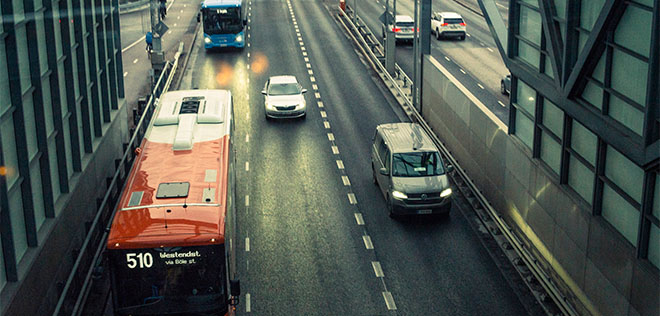
Recent research indicates that lowering public transport fares in the Helsinki metropolitan area reduced car use and CO2 emissions. However, the measure was expensive in terms of cost per tonne of CO2 reduced compared to other climate actions.
Fuel taxes have been found to be one of the most effective ways to reduce emissions from the transportation sector. However, fuel taxes often face resistance from citizens, who perceive them as unfair, making fuel tax hikes difficult to implement.
In his doctoral dissertation, researcher Kimmo Palanne from Aalto University and the VATT Institute for Economic Research investigates whether emissions from transportation can be reduced by lowering public transport fares. The study looks at a 2019 public transport pricing and zoning reform in the Helsinki region, which reduced travel fares by up to 45% for some customers.
"Lowering public transport fares led to a reduction in car use and emissions, but it had no impact on car ownership. Although the effect on kilometres travelled by car was significant for some people, the price reduction was a relatively expensive climate action compared to measures such as fuel tax increases", Palanne summarizes the findings of the study.
Kilometres travelled by car decreased, but car ownership remained unchanged
The fare reductions led to a clear decrease in kilometres travelled by car, especially in areas near the boundary of the travel zone that qualified for the lower fares. The greatest impact was observed within six hundred meters from the boundary, where annual kilometres travelled decreased by an average of 700–1400 kilometres among those receiving the fare reductions.
The elasticity of driving in response to changes in public transport fares ranged from 0.06 to 0.27, meaning a 10% fare reduction would result in a 0.6% to 2.7% reduction in kilometres travelled. The closer a person lived to the fare zone boundary, the stronger was the response to price changes.
Although some people clearly drove less, the study found no changes in car ownership. This suggests that people switched to public transport for some trips but did not completely give up driving. This might indicate that public transport cannot replace private car use on all trips, even if it becomes more attractive through lower fares.
Relatively expensive way to reduce emissions
According to the study, lowering public transport fares is a relatively expensive method for reducing emissions from transportation. The estimated cost of emissions reductions ranged from €1000 to €3000 per tonne of CO2. In comparison, fuel tax hikes, according to previous studies, could cost less than €100 per tonne of CO2 reduced. Therefore, public transport pricing reforms are a much more costly method of reducing emissions.
"Due to the relatively high cost, public transport fare reductions are an attractive climate measure only when other options, such as fuel taxes increases, are politically unfeasible or insufficient to meet emission reduction goals. Of course, public transport can also be supported for other reasons, Palanne notes.
Reliable research design
The study employs a difference-in-differences approach, comparing individuals living near the boundary of a travel zone where some received the fare reduction while others did not. This approach makes it possible to isolate the effects of fare changes from other factors influencing private car use and transportation emissions. The data on car use and residential locations used in the research were provided by Statistics Finland and Traficom.
Kimmo Palanne will defend his dissertation, Essays on Transportation and the Environment, at Aalto University on March 21, 2025. The opponent will be Associate Professor Anders Munk-Nielsen from the University of Copenhagen.
In addition to the study on public transport fare reductions, the dissertation also includes research on the effects of fuel taxes on fuel prices in Finland and the distribution of fuel tax burdens across households. The study on the effects of carbon taxes on fuel prices was published in the Journal of Environmental Economics and Management (JEEM). Find out more.
Kimmo Palanne
Energy, climate and environment Environment, energy and climate policy Press release Uutiset ja tiedotteet climate climate policy energy, climate and environment fuel taxes transport